
An old dishwasher can take up valuable space in your kitchen, garage, or renovation project. When the appliance stops cleaning properly, develops a major fault, or becomes too expensive to repair, replacing it may be the practical choice. However, deciding what to do with the old unit is just as important as choosing a replacement.
Dishwasher recycling offers a responsible way to handle an unwanted appliance while recovering useful materials instead of sending everything to a landfill. Most dishwashers contain steel, smaller metal components, electrical parts, plastic fittings, and other materials that can be separated for appropriate processing.
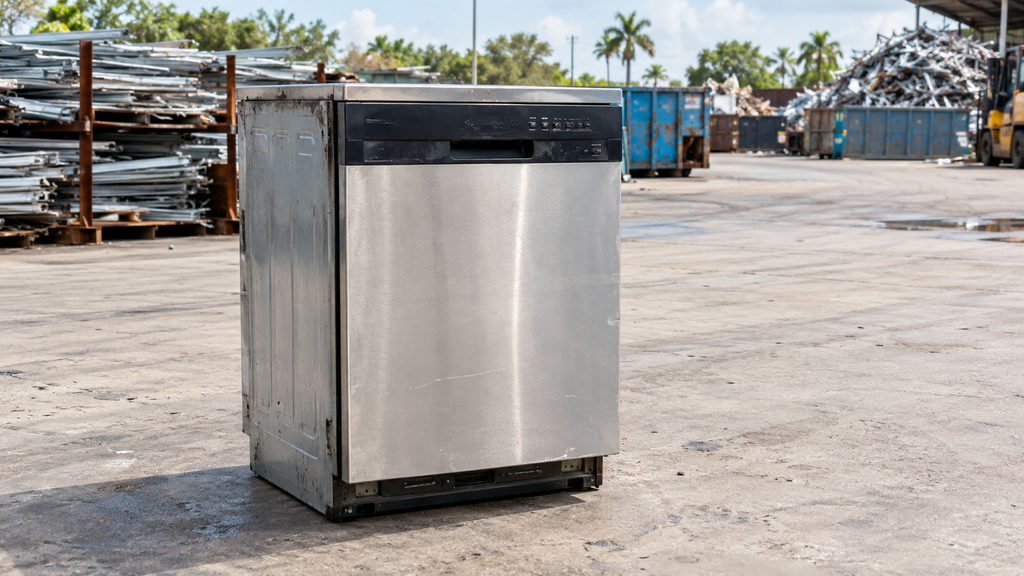
For homeowners, property managers, contractors, and renovation professionals in South Florida, understanding the recycling process can make appliance removal easier and help prevent reusable metal from going to waste.
This guide explains what parts of a dishwasher can be recycled, how to prepare an old unit, what affects its potential scrap value, and how to find a suitable recycling option.
Why Is Dishwasher Recycling Important?
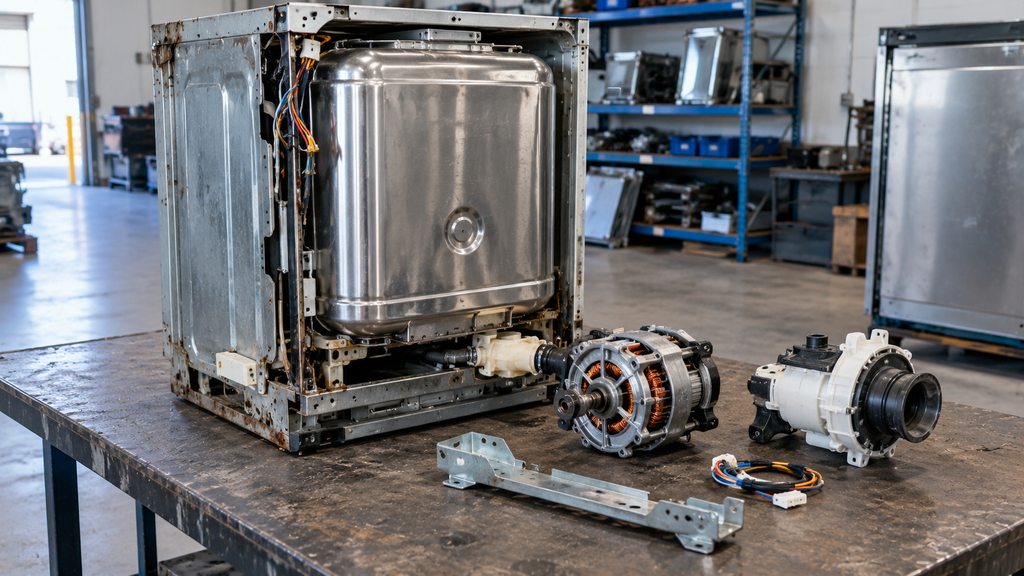
A dishwasher is more than a plastic and metal box. Its cabinet, internal frame, racks, motor, pump, wiring, and other components contain materials that may be recovered through appropriate recycling processes.
When these materials are handled correctly, they can re-enter manufacturing supply chains and reduce the demand for newly extracted raw materials.
There are several practical reasons to recycle an old dishwasher:
- Recover valuable metals: Steel and certain other metal components can be collected and processed for reuse.
- Reduce unnecessary waste: Recycling diverts suitable materials away from disposal facilities.
- Support resource conservation: Recovering existing materials can reduce the need for virgin raw materials.
- Clear renovation and storage areas: Removing a broken appliance creates space for new equipment.
- Improve waste management: Separating recyclable materials from general waste helps make disposal more responsible.
The U.S. Environmental Protection Agency explains the importance of recovering materials and managing household waste responsibly in its recycling guidance.
For property owners and contractors, responsible appliance handling is also a useful part of a larger renovation waste-management plan.
What Metals Can Be Recovered From an Old Dishwasher?
Understanding the materials inside an appliance helps explain why a scrap yard may accept it even when it no longer works.
1. Stainless Steel and Other Steel Components
Many dishwashers have a stainless steel interior tub, while other models use different tub materials. Exterior cabinets, frames, brackets, and structural components may contain ordinary steel.
Steel is often one of the main recyclable materials in a dishwasher. However, the exact amount depends on the model, construction, and condition of the appliance.
A recycler may separate the steel from plastic, insulation, wiring, and other materials before further processing.
2. Copper Wiring
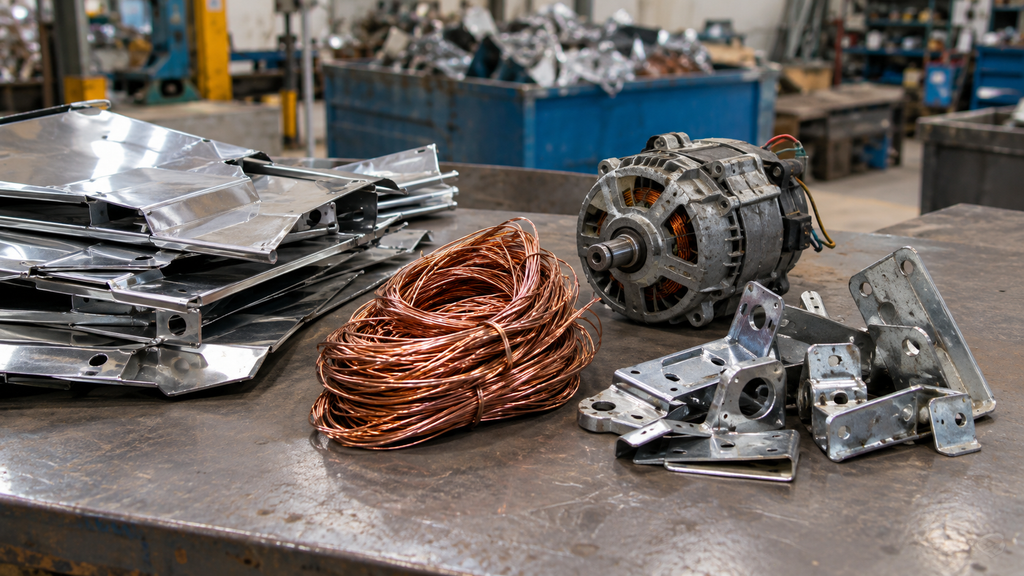
Dishwashers contain electrical wiring and connections. Some of these components contain copper, a metal widely recovered through scrap recycling.
The amount of copper in a typical dishwasher is limited, so the presence of wiring does not automatically make the appliance highly valuable.
Avoid cutting wires or dismantling electrical assemblies yourself. A qualified recycler can determine how to handle these parts safely and whether further separation is worthwhile.
3. Aluminum Components
Depending on the manufacturer and design, a dishwasher may contain aluminum in selected motor, pump, or other mechanical components.
Aluminum and steel require different processing and sorting methods. Separating materials appropriately can help recyclers direct them into suitable recovery streams.
4. Motors, Pumps, and Electrical Parts
Motors and pumps contain a mixture of materials, potentially including steel, copper, aluminum, and plastics.
These assemblies may need additional processing before their recyclable metals can be recovered. Their value depends on the materials present, the amount of recoverable metal, and the recycler’s purchasing policies.
5. Plastic, Rubber, and Glass
Not every dishwasher component has a scrap-metal value. Hoses, seals, control panels, insulation, plastic fittings, and some glass components may have different disposal or recycling requirements.
This is why a complete appliance is not necessarily valued as if every pound were clean, separated metal.
If you want to learn more about material recovery, All Metal Recycling provides information about its metal recycling services.
How to Prepare an Old Dishwasher for Recycling
Proper preparation can make appliance removal easier and reduce the risk of leaks, damage, or injury. Follow these steps before arranging collection or transporting the unit.
Step 1: Confirm That the Appliance Needs Replacement
If the dishwasher still works, consider whether repairing it or passing it on for reuse is a reasonable option.
A broken pump, blocked filter, or minor component failure may not always mean the entire appliance has reached the end of its useful life. Compare the repair cost with the price of a replacement before making your decision.
If the unit is beyond economical repair, recycling may be the next practical step.
Step 2: Disconnect the Power Safely
Turn off the appliance’s power supply and ensure the dishwasher is disconnected before moving it.
Electrical connections should be handled by a qualified person when necessary. Do not pull on exposed wires or attempt repairs if you are unfamiliar with electrical work.
Step 3: Shut Off and Disconnect the Water Supply
Close the water supply valve and disconnect the inlet hose using an appropriate procedure. Drain remaining water from the appliance and hoses to reduce spills during removal.
Dishwashers can retain water even after a cycle has finished, so keep towels and a suitable container available.
Step 4: Remove Dishes and Loose Items
Empty the racks and remove dishes, utensils, food debris, and other loose objects. Clean out accessible filters if appropriate and permitted by the manufacturer’s instructions.
There is no need to dismantle the entire appliance simply to prepare it for recycling.
Step 5: Arrange Safe Removal
Dishwashers can be awkward to carry through narrow doorways and across stairs. Secure the door and racks as needed, protect surrounding surfaces, and use suitable lifting equipment or professional assistance.
Do not attempt to lift a heavy appliance alone if doing so could cause injury.
Step 6: Confirm the Recycler’s Requirements
Before loading the dishwasher into a vehicle, contact the intended recycling facility. Ask whether it accepts complete dishwashers, whether drop-off appointments are required, and whether any preparation or fees apply.
Acceptance policies differ between facilities. Confirming the requirements beforehand can save time and avoid an unnecessary trip.
How Much Can You Get for an Old Dishwasher?
One of the most common questions homeowners ask is whether an old dishwasher is worth selling for scrap.
The answer depends on its weight, construction, material composition, condition, local market demand, and the recycler’s purchasing rules. A working appliance may have reuse value, while a nonworking unit may primarily be assessed for its recoverable materials.
Factors That Affect Scrap Value
Appliance weight: A heavier model may contain more metal, but weight alone does not determine its value.
Metal composition: A unit with recoverable steel and other metals may be handled differently from one containing a higher proportion of nonmetal materials.
Preparation and sorting: Clean, separated metal may receive a different rate from an appliance containing mixed materials, plastic, insulation, and electrical assemblies.
Local market conditions: Metal prices change with market demand, material grades, and regional purchasing conditions.
Transportation costs: Collection charges or delivery expenses can reduce the amount you receive, even when the appliance contains recoverable materials.
How Much Does Metal Recycling Pay?
The question of how much does metal recycling pay cannot be answered with one universal rate. Scrap yards generally evaluate the type, grade, weight, and condition of the material being purchased.
For example, a load of separated steel is not necessarily priced like a load of mixed appliances. Copper wiring may be assessed differently from an entire dishwasher containing steel, plastic, and other components.
To estimate your potential return, describe the appliance, its approximate size, whether it is complete, and whether you can transport it to the facility. Ask the recycler how it classifies the item and whether its quoted amount is based on the whole appliance or separated materials.
Do not assume that every dishwasher will qualify for a cash payment. Some facilities may accept appliances under specific conditions, while others may charge for particular handling or collection services.
What Should You Know About Recycling Center Prices?
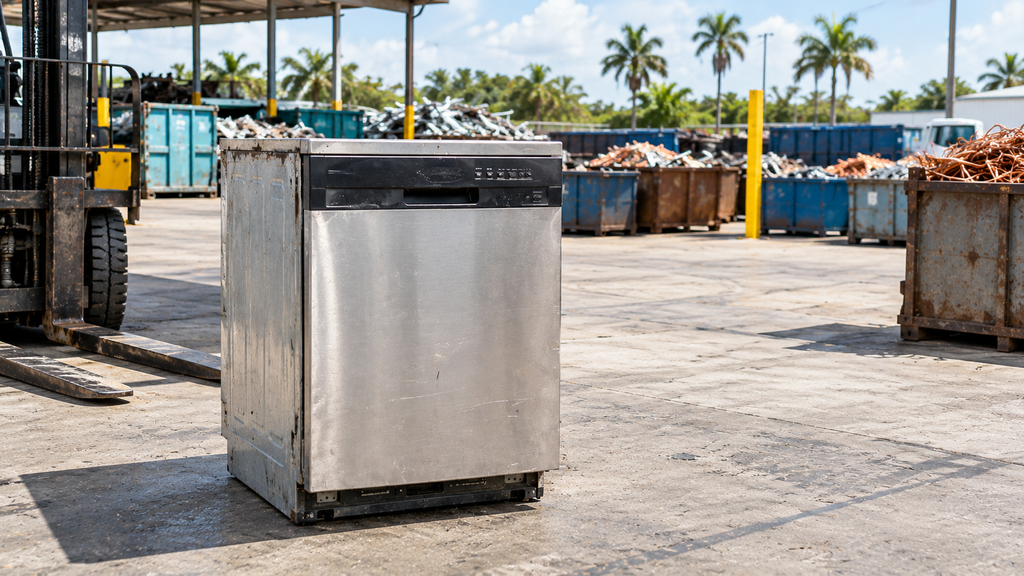
When comparing recycling center prices, check what each quote actually covers. One facility might quote a rate for a specific grade of metal, while another might evaluate a mixed appliance as a complete unit.
Ask these questions before choosing a recycler:
- Does the facility accept complete dishwashers?
- Is the appliance purchased by weight or assessed by material type?
- Are there minimum quantities or grade requirements?
- Are collection, handling, or processing charges applicable?
- Does the quoted price include transportation?
- Can the facility explain how the final amount is calculated?
Clear answers help you compare options accurately rather than choosing a facility based on an advertised metal rate that may not apply to your appliance.
Where Can You Recycle a Dishwasher in South Florida?
If you are replacing a dishwasher in South Florida, you can investigate several options depending on the appliance’s condition and your transportation needs.
Local Scrap Metal Recyclers
A scrap metal recycler may be an appropriate option for an old dishwasher that is no longer usable. Contact the facility first to verify that it accepts this particular appliance and learn how it handles mixed materials.
All Metal Recycling offers information about its recycling services and can be contacted through its official website. Ask about current acceptance requirements, material assessment, and any available drop-off or collection arrangements before transporting your unit.
Municipal Waste and Bulk Collection Programs
Your local municipality or solid waste provider may offer bulky-item collection, designated drop-off locations, or appliance disposal instructions.
Availability and rules vary by community. Some programs require advance scheduling or impose restrictions on what they collect.
Appliance Retailer Take-Back Programs
If you are purchasing a new dishwasher, ask the retailer whether delivery includes removal of the old appliance. Confirm where the old unit will go and whether recycling is included in the service.
This option may be convenient when the replacement is delivered directly to your home.
Donation or Resale
If the dishwasher is functional, safe, and in suitable condition, consider whether a legitimate reuse or donation option is available. Be honest about its condition and check whether the receiving organization accepts used appliances.
The goal is to choose the most appropriate option for the appliance rather than sending a repairable unit directly to scrap unnecessarily.
Dishwasher Recycling for Contractors and Property Managers
Large renovation projects, apartment turnovers, kitchen upgrades, and property maintenance can generate several unwanted appliances at once.
For these projects, planning removal and recycling in advance can reduce clutter and help prevent recyclable materials from being mixed with general construction debris.
Contractors should consider grouping suitable appliances for collection, checking facility requirements before transport, and keeping records of disposal arrangements where needed.
Property managers should also establish a consistent process for identifying reusable equipment, arranging safe removal, and confirming the destination of discarded appliances.
If a project includes old computers, control equipment, or other eligible electronic devices, review the relevant requirements before combining them with appliance loads. All Metal Recycling also provides information about its electronic recycling services.
Environmental Considerations When Recycling Dishwashers
Recycling can recover useful materials, but the process works best when appliances are handled safely and directed to suitable facilities.
Avoid leaving unwanted appliances outdoors for extended periods, where rain and moisture can contribute to corrosion or create drainage problems. Do not burn wires, dismantle electrical components without the necessary skills, or dump appliances on private or public land.
Large appliances should not automatically be treated as ordinary curbside recyclables. Check local collection rules and confirm that the receiving facility can manage the item appropriately.
The U.S. Environmental Protection Agency provides additional information about responsible appliance disposal, including the importance of proper handling for appliances containing refrigerants and other regulated materials. A conventional dishwasher generally does not contain a refrigeration system, but its electrical and mixed-material components still require appropriate handling.
For a broader overview of recycling options, homeowners can also consult the ENERGY STAR guide to recycling other appliances.
Choose All Metal Recycling for Your Metal Recycling Needs
Replacing an old dishwasher is an opportunity to manage unwanted materials more responsibly. Rather than assuming the appliance belongs in the trash, investigate whether its metal components can be recovered through a suitable recycling facility.
All Metal Recycling serves customers seeking metal recycling information and services in South Florida. If you have an old dishwasher or other metal-containing equipment, visit the company’s website to learn about its services and confirm the current requirements for your specific item.
For customers in the surrounding area, the company also provides location information for West Palm Beach scrap metal recycling and Fort Lauderdale scrap metal recycling. Contact the facility before making a trip to verify acceptance, pricing, and transportation arrangements.
Ready to handle an unwanted appliance responsibly? Contact All Metal Recycling to ask about your dishwasher and explore the available metal recycling options.
Frequently Asked Questions
1. Can an old dishwasher be recycled?
Yes. Many dishwashers contain recyclable metals, including steel and certain other metal components. Acceptance depends on the recycling facility, so contact All Metal Recycling to confirm whether your particular appliance can be accepted.
2. Does All Metal Recycling accept broken dishwashers?
Acceptance of broken or complete dishwashers depends on the facility’s current policies and material-handling requirements. Contact All Metal Recycling directly before bringing your appliance in to confirm whether it can accept your unit.
3. Can I get money for my old dishwasher?
Possibly. Payment depends on the appliance’s metal content, weight, condition, local scrap market, and the facility’s purchasing rules. Ask All Metal Recycling whether your dishwasher qualifies for a payment and how its value would be assessed.
4. Should I remove the metal parts before recycling a dishwasher?
Not necessarily. Many customers can arrange for an intact appliance to be assessed by a suitable recycler. Avoid dismantling electrical assemblies or cutting wiring unless you have the appropriate knowledge and equipment. Check All Metal Recycling’s preparation requirements before removing any parts.
5. Where can I find dishwasher recycling in South Florida?
Start by contacting a local scrap metal recycler, checking your municipal bulk-waste program, or asking an appliance retailer about take-back services. All Metal Recycling provides recycling service information for South Florida customers. Contact the company to confirm the nearest suitable option and its current acceptance policies.
6. What information should I provide when asking for a recycling quote?
Share the appliance type, approximate size, condition, whether it is complete, and whether you need collection or can deliver it yourself. All Metal Recycling can advise you on its current requirements and whether it can assess the appliance for recycling.