
If you have old pipes, wires, appliances, metal fixtures, auto parts, or leftover construction material sitting around, cleaning and sorting them before taking them to a recycling facility can make the process easier and may help you get a better return. But cleaning scrap metal does not mean stripping, cutting, or processing every piece as much as possible. The goal is to remove obvious contaminants, separate different metals, and prepare the material safely for a scrap yard.
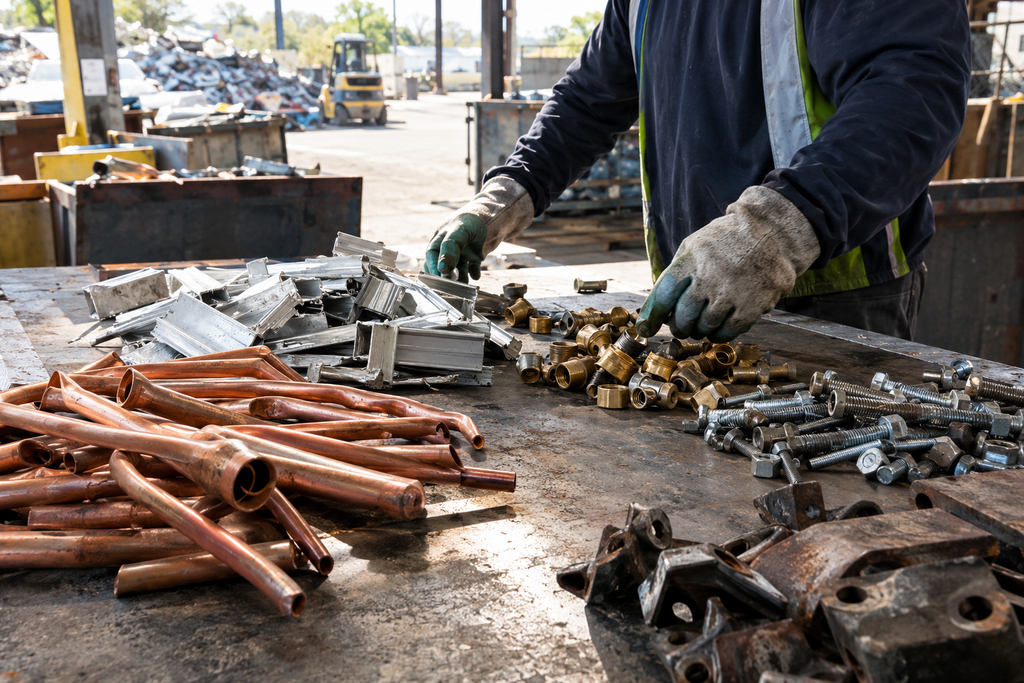
Knowing how to clean scrap metal before selling can also help you avoid unnecessary trips, confusing mixed loads, and delays at the recycling center. Clean, organized material is generally easier to identify and sort than a pile containing metal mixed with plastic, wood, dirt, liquids, or other materials.
Whether you are clearing a garage, remodeling a property, cleaning up a workshop, or preparing old metal from a business, the following steps can help you get your scrap ready for recycling.
Why Should You Clean Scrap Metal Before Selling?
Scrap metal is usually evaluated according to the type, quality, weight, and condition of the material. A load containing several different metals and non-metallic materials can be harder to sort and evaluate.
Cleaning your scrap can help you:
- Remove dirt and loose debris
- Separate ferrous and non-ferrous metals
- Identify higher-value materials
- Reduce unnecessary contamination
- Make weighing and sorting easier
- Prepare your load for a smoother recycling visit
However, cleaning does not automatically guarantee a higher price. Scrap values change with market conditions, material type, grade, weight, and the policies of the recycling facility.
The U.S. Environmental Protection Agency explains that metal recycling involves collecting and processing recyclable material before it moves into further manufacturing processes. Local recycling options and accepted materials can vary, so checking the requirements of your chosen facility before making a trip is a smart step.
For homeowners and businesses looking for professional scrap metal recycling services, proper sorting can make the entire process more straightforward.
Step 1: Sort the Scrap by Metal Type
Before cleaning anything, separate your scrap into basic categories.
Common categories include:
- Steel and iron
- Aluminum
- Copper
- Brass
- Stainless steel
- Wire and cable
- Metal appliances
- Automotive metal
- Mixed metal items
A simple magnet can help distinguish many ferrous metals from non-ferrous metals. If a magnet sticks strongly to the material, it is generally ferrous, such as steel or iron. If it does not stick, the item may be aluminum, copper, brass, or another non-ferrous metal.
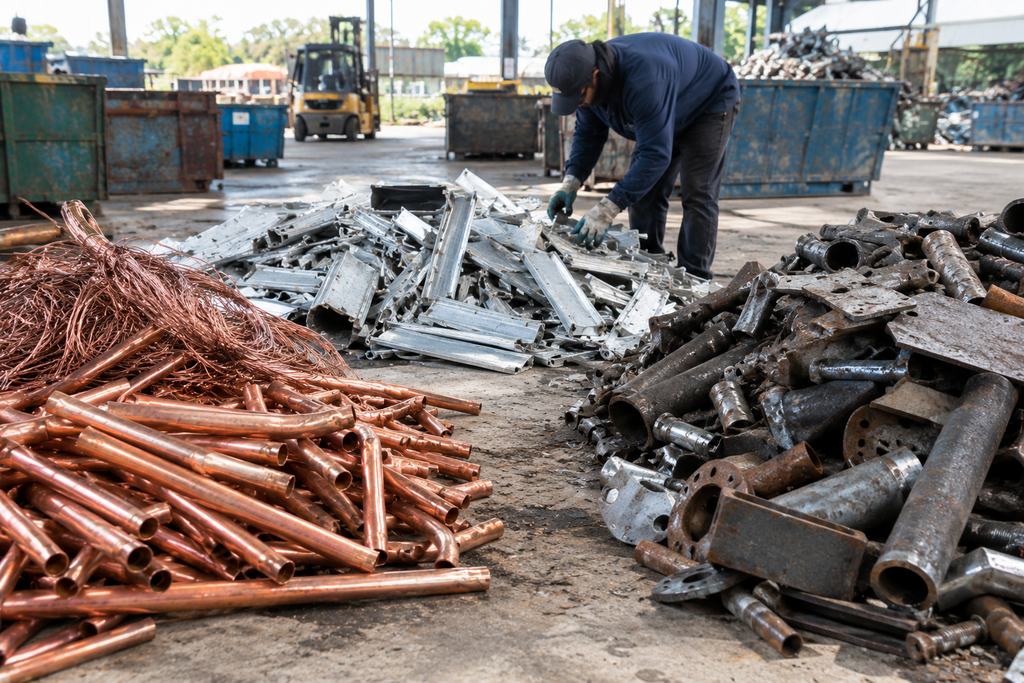
Sorting does not require expensive equipment. Even separating obvious categories into different bins or piles can make your load easier to handle.
For larger loads, organized preparation becomes even more important because mixed materials can take considerably longer to inspect and separate.
Step 2: Remove Non-Metal Materials
One of the most useful parts of how to clean scrap metal before selling is removing obvious non-metal attachments when doing so is safe and practical.
For example, you may find:
- Plastic attached to metal
- Wooden pieces
- Cardboard
- Rubber
- Excess packaging
- Loose dirt
- Insulation
- Non-metal brackets or components
Do not spend hours dismantling a low-value item if the labor, tools, or risk outweigh the potential benefit.
The objective is not to make every item perfectly clean. Instead, focus on practical preparation that makes the material easier to identify and recycle.
If you have old computers, electronics, cables, or electronic components, they may need to be handled separately. You can learn more about electronic recycling options before combining these materials with your ordinary scrap metal.
Step 3: Remove Loose Dirt, Grease, and Debris
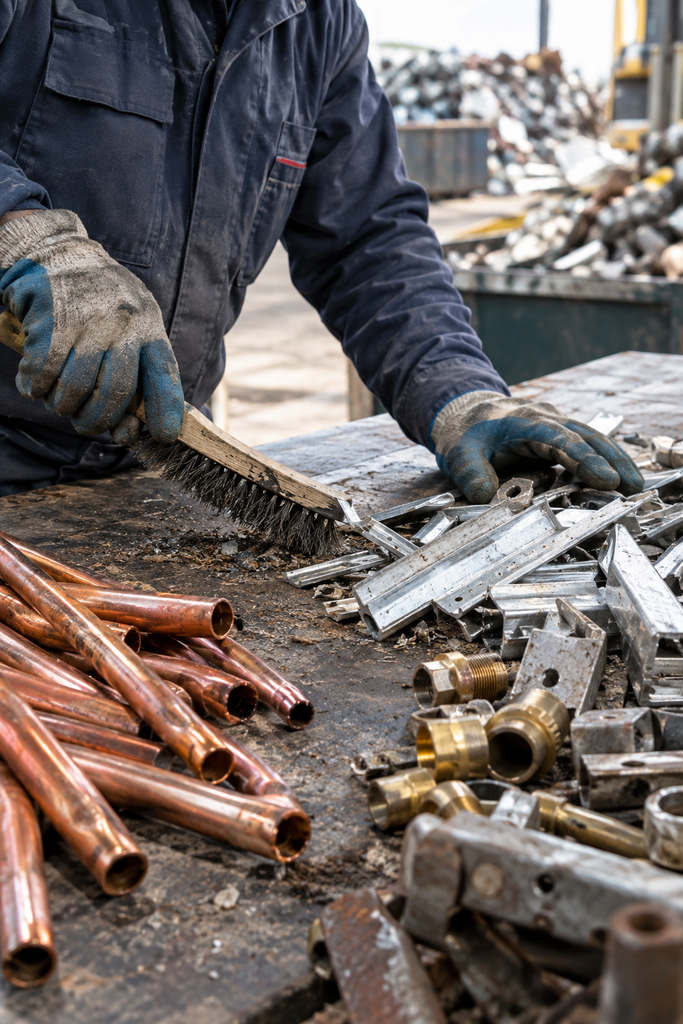
Light dirt and loose debris can usually be brushed or wiped away before transporting scrap.
For example, old steel brackets may have soil or dust attached. Aluminum pieces may contain construction debris. Metal parts from a workshop may have grease or oil residue.
For basic household scrap, a stiff brush, rag, or simple cleaning method may be enough.
Avoid using aggressive chemicals simply to make ordinary scrap look cleaner. Some materials can contain oils, chemicals, refrigerants, batteries, or other substances that should not be handled casually.
The EPA highlights the importance of preventing releases of liquids and hazardous substances in scrap-metal operations, including oils, battery contents, and refrigerants. This is particularly important when dealing with appliances, automotive components, and equipment.
If you are preparing metal from an air conditioner or similar equipment, review appropriate air conditioning recycling services rather than attempting to release refrigerant yourself.
The EPA highlights the importance of preventing releases of liquids and hazardous substances in scrap-metal operations, including oils, battery contents, and refrigerants. This is particularly important when dealing with appliances, automotive components, and equipment.
Step 4: Separate Valuable Non-Ferrous Metals
Copper, brass, and aluminum are examples of non-ferrous metals that are commonly separated from steel and iron.
Keeping these materials separate can make identification easier and prevents valuable materials from becoming buried inside a mixed pile.
For example, you might create separate containers for:
Copper: pipes, tubing, wire, and certain electrical components.
Aluminum: window frames, siding pieces, cans, certain automotive components, and other aluminum products.
Brass: plumbing fittings, valves, hardware, and some fixtures.
Steel: structural pieces, tools, appliances, brackets, and other magnetic metal.
If you are unsure about a particular item, do not guess based only on appearance. A recycling facility can determine how the material should be categorized.
Step 5: Prepare Wires and Cables Carefully
Old electrical wire can contain valuable copper, but preparation should be approached carefully.
Some recyclers accept insulated wire as-is, while others may classify different grades separately. Stripping insulation may sometimes change the material category, but the time and effort involved should be considered before doing it yourself.
Never burn wire to remove insulation. Burning can create harmful fumes and leaves you with a contaminated material that may be harder to handle safely.
Instead, keep wire clean, dry, and separated from unrelated materials. If you have a large quantity, ask your recycling facility which wire grades they accept and how they prefer them prepared.
Step 6: Be Careful With Appliances and Automotive Scrap
Old appliances and vehicle components can contain more than metal.
Refrigerators, air conditioners, compressors, vehicles, and other equipment may contain oils, refrigerants, batteries, fluids, or other components that require special handling.
Do not puncture pressurized components or release refrigerants simply because you want to clean the metal.
Automotive material should also be prepared according to the recycling facility’s requirements. If you are getting rid of an unwanted vehicle, a dedicated junk car recycling service may be more appropriate than dismantling the vehicle yourself.
Safety should always come before trying to increase the weight or apparent value of a scrap load.
Step 7: Keep Different Grades Separate
After cleaning, keep similar materials together.
A practical sorting system might look like this:
| Material | Preparation |
|---|---|
| Copper | Keep separate from steel and aluminum |
| Aluminum | Remove obvious non-metal attachments |
| Brass | Separate from mixed steel |
| Steel | Keep together and remove loose debris |
| Insulated wire | Keep in a dedicated container |
| Appliances | Keep separate until accepted |
| Automotive scrap | Follow facility requirements |
This organization helps you answer an important question before visiting a yard: what exactly do you have?
That matters when comparing recycling center prices, because the value of a load depends on the material category rather than simply the total weight.
How Much Does Metal Recycling Pay?
People often ask how much does metal recycling pay after cleaning and sorting their material.
There is no single price that applies to every scrap load. Prices can vary based on:
- Type of metal
- Grade or quality
- Weight
- Local market conditions
- Current commodity demand
- Whether material is clean or mixed
- The recycling facility’s buying policy
Non-ferrous metals such as copper, brass, and aluminum can have different values from common ferrous metals such as steel and iron.
This is why searching for one universal scrap price can be misleading. Instead, identify your materials first and then ask the recycling facility about its current buying prices.
When comparing recycling center prices, make sure you are comparing the same material categories. A price for clean copper cannot be directly compared with a price for mixed steel.
How to Get Better Scrap Value Without Over-Processing
The best preparation strategy is usually simple: sort, clean, separate, and transport safely.
You do not necessarily need to dismantle every item down to individual components. In fact, unnecessary cutting or dismantling can create sharp edges and increase the risk of injury.
Before doing additional work, ask yourself:
- Can I safely identify this metal?
- Can I easily remove obvious non-metal material?
- Will separating it make the material easier to classify?
- Is the additional work worth my time?
- Does the recycling facility accept the material in this condition?
If the answer to most of these questions is yes, basic preparation makes sense.
For residents in the Palm Beach area, checking a nearby scrap metal recycling service in West Palm Beach can be a useful next step when you have sorted material ready to sell.
What Should You Avoid When Cleaning Scrap Metal?
Some preparation methods can create more problems than they solve.
Avoid:
- Burning wire or metal
- Pouring oil or chemicals onto the ground
- Releasing refrigerants
- Cutting pressurized components
- Handling unknown hazardous substances without proper precautions
- Mixing batteries with ordinary scrap
- Using dangerous chemicals unnecessarily
- Creating sharp edges without proper safety equipment
The EPA notes that scrap-metal operations can involve environmental and safety concerns associated with liquids, batteries, refrigerants, and other materials. Proper handling is therefore part of responsible recycling, not just a way to improve the appearance of your load.
If you have a large or unusual quantity of material, contact a recycling facility before dismantling it.
Where Can You Sell Clean Scrap Metal?
Once your material has been sorted and prepared, the next step is finding a recycling center or scrap yard that accepts your specific materials.
Look for a facility that clearly explains:
- What metals it accepts
- How materials are classified
- How pricing is determined
- Whether identification is required
- Whether large loads or commercial quantities are accepted
- Whether pickup options are available
For South Florida residents, All Metal Recycling provides scrap recycling services for customers who want to turn unwanted metal into recyclable material instead of sending it to the landfill.
If you are located around Boynton Beach, you can also explore scrap metal recycling in Boynton Beach to find a convenient local option.
The U.S. Environmental Protection Agency explains that metal recycling involves collecting and processing recyclable material before it moves into further manufacturing processes. Local recycling options and accepted materials can vary, so checking the requirements of your chosen facility before making a trip is a smart step.
Final Tips Before You Take Scrap to a Recycling Center
A few minutes of preparation can make your recycling trip much easier.
Before leaving, check that:
- Your metals are separated
- Loose dirt and debris are removed
- Non-metal attachments are minimized
- Copper, aluminum, brass, and other non-ferrous metals are kept separate
- Wire is grouped together
- Appliances and automotive parts are identified
- Hazardous or potentially regulated materials are handled appropriately
- The recycling center accepts the material you are bringing
Most importantly, do not assume that the heaviest load is automatically the most valuable. Material type and grade can matter just as much as weight.
FAQs
1. What is the easiest way to clean scrap metal before selling?
Start by removing loose dirt, plastic, wood, rubber, and other obvious non-metal materials. Then separate the metal into categories such as copper, aluminum, brass, and steel. You do not need to make every piece perfectly polished.
2. Does cleaning scrap metal increase its value?
Cleaning and sorting can make material easier to identify and may help it qualify for a more appropriate category, but it does not guarantee a higher price. The final value depends on the material, grade, weight, market conditions, and the recycling center’s current pricing.
3. How much does metal recycling pay for copper and aluminum?
Copper and aluminum prices vary over time and can differ by material grade and condition. The best way to determine your potential return is to separate your materials and ask All Metal Recycling about current buying prices for the specific scrap you have.
4. How should I compare recycling center prices?
Compare prices for the same metal type and grade. A quoted price for clean copper should not be compared directly with a price for mixed steel. Also consider convenience, accepted materials, weighing procedures, and available services.
5. Can All Metal Recycling accept different types of scrap metal?
All Metal Recycling serves customers looking to recycle a variety of metal materials. If you have a mixed or unusual load, contact the business before making your trip so you can confirm what is accepted and how the material should be prepared.
6. Where can I sell scrap metal in South Florida?
All Metal Recycling is a local option for customers looking to recycle scrap metal in the South Florida area. If you have sorted material ready to go, contact All Metal Recycling to discuss your scrap and the available recycling options.
Turn Your Scrap Into Something Useful
Learning how to clean scrap metal before selling does not require complicated equipment or hours of unnecessary work. The most effective approach is to remove obvious contamination, separate different metals, keep potentially hazardous materials handled appropriately, and confirm the recycling center’s requirements before you arrive.
If you are ready to sell scrap metal, All Metal Recycling can help you take the next step. Prepare your material, organize your load, and contact a local recycling professional to find out how your scrap can be evaluated and recycled responsibly.