
A used catalytic converter may look like an ordinary automotive part, but it can contain valuable materials that are worth recovering. Instead of allowing an old converter to become unnecessary waste, responsible recycling can help recover useful metals and support more sustainable manufacturing. For vehicle owners, auto repair shops, and people dealing with end-of-life vehicles, understanding the recycling process can also help them make better decisions about where to take unwanted automotive components.
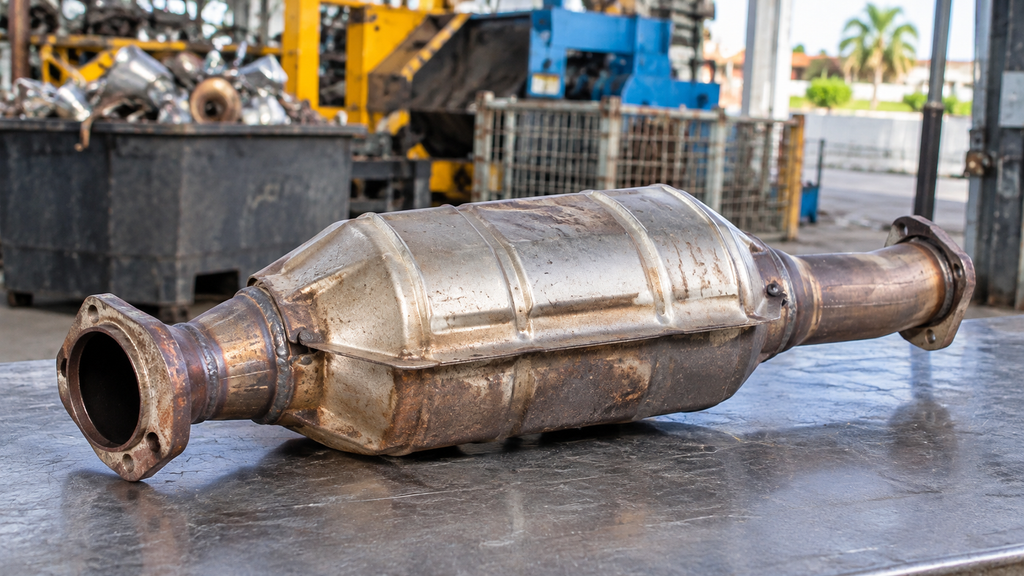
Catalytic Converter Recycling is important because these vehicle emission-control components contain small quantities of precious metals, including platinum, palladium, and rhodium. Their actual value depends on the converter’s composition, identification, condition, and current metal market prices. Not every used unit has the same material content, which is why checking its identification and getting a proper evaluation matters.
If you are in South Florida and looking for a dependable local recycling business, All Metal Recycling provides metal recycling services for customers across Palm Beach, Broward, and Miami-Dade counties. Before bringing in a detached catalytic converter, contact the business to confirm whether this specific item can be accepted and what documentation is required.
What Is a Catalytic Converter and Why Is It Valuable?
A catalytic converter is an emission-control component installed in a vehicle’s exhaust system. Its primary purpose is to help reduce harmful pollutants produced during engine operation by converting certain exhaust gases into less harmful substances through chemical reactions.
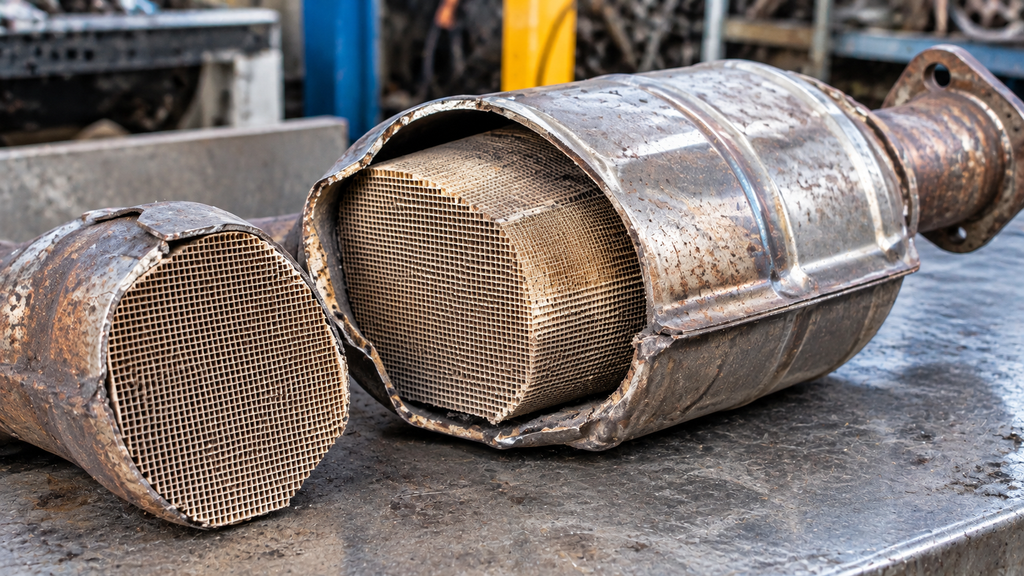
Inside the converter is a honeycomb-like structure coated with catalytic materials. These coatings can contain three important platinum-group metals:
- Platinum: Used in catalytic reactions that help reduce harmful emissions.
- Palladium: Plays an important role in converting pollutants in gasoline-engine exhaust.
- Rhodium: Helps reduce nitrogen oxide emissions.
These materials are valuable because they have important industrial applications and are not equally available in every used converter. The amount of each metal can vary significantly depending on the vehicle manufacturer, engine type, converter design, and production specifications.
According to the U.S. Department of Energy’s research on platinum-group metals and automotive catalysts, recovering these metals from end-of-life converters contributes to the recycled supply of platinum, palladium, and rhodium.
This is why an old automotive component may have recycling value even when it is no longer useful for its original purpose.
How Does Catalytic Converter Recycling Work?
The recycling process involves more than simply collecting an old exhaust component and selling it as ordinary scrap metal. Specialized processing is needed to recover the valuable materials inside it.
Here is a general overview of how the process works.
1. Collection and Initial Inspection
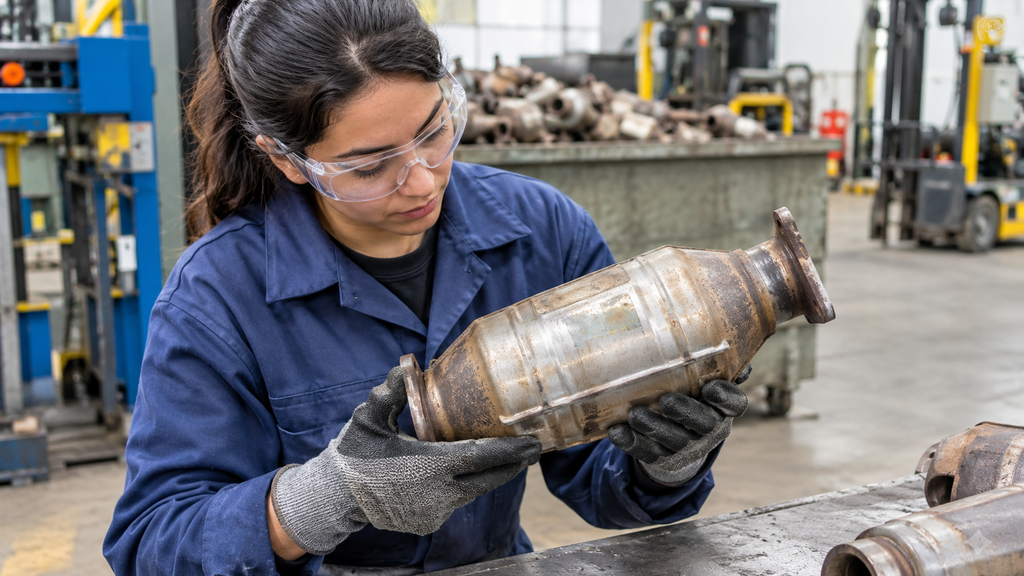
The first stage involves collecting legally obtained used catalytic converters and inspecting their physical condition. Recyclers may examine the exterior housing, manufacturer information, identification numbers, and other visible features.
The converter’s identification can help determine its original application and potential material composition. Keeping the unit intact is important because cutting, crushing, or removing its internal material can make identification and evaluation more difficult.
2. Identification and Grading
Not all converters are manufactured with the same amount or combination of precious metals. Two units that look similar may have different recycling values.
Depending on the buyer’s process, identification may involve part numbers, serial numbers, reference databases, and visual inspection. Some specialist processors also use analytical testing to estimate or measure the precious metal content.
This stage helps distinguish between different converter categories instead of treating every unit as identical scrap.
3. Material Preparation
After inspection and identification, specialist recycling facilities prepare the converters for material recovery. Depending on the processing method, the outer metal housing may be separated from the internal catalyst material.
The internal ceramic or metallic substrate is then prepared for further processing. Industrial facilities may use controlled size reduction and homogenization to prepare material for sampling and analysis.
This work should be handled by qualified processing facilities rather than attempted at home.
4. Testing and Precious Metal Recovery
Once the catalyst material has been prepared, specialist processors can analyze it to determine the quantities of platinum, palladium, and rhodium present.
Laboratory analysis and refining methods help recover these materials for potential reuse in industrial manufacturing. The exact recovery method depends on the processing facility and the composition of the material.
5. Reuse of Recovered Materials
The recovered metals can re-enter industrial supply chains. Platinum-group metals have applications in automotive catalysts and other industrial processes.
Recycling helps make use of existing materials instead of relying entirely on newly mined resources. It also gives end-of-life automotive components another useful purpose.
What Determines Catalytic Converter Scrap Value?
One of the most common questions sellers ask is how much an old converter is worth. The answer depends on several factors, and there is no single price that applies to every unit.
Understanding these factors can help you avoid unrealistic expectations when requesting a quote.
Precious Metal Content
The most important consideration is often the amount of recoverable platinum, palladium, and rhodium inside the converter. A unit containing a higher concentration of valuable metals may have a greater potential recycling value.
However, the actual composition cannot always be determined from the outside appearance.
Vehicle Make and Model
Different manufacturers use different converter designs and material formulations. The year, engine type, vehicle model, and original equipment specifications can all influence the converter’s potential value.
For this reason, providing accurate vehicle information and visible identification details can help a specialist evaluate the part.
Current Precious Metal Markets
Platinum, palladium, and rhodium prices fluctuate according to market conditions, industrial demand, supply, and other economic factors.
These market movements can affect the amount a processor is willing to pay for a particular converter. A quote received today may not remain the same in the future.
Identification and Physical Condition
A readable identification number can make it easier to determine which converter is being evaluated. Damaged, modified, or incomplete units may require additional inspection.
Never remove identification markings or alter a converter to improve its appearance. Keep the original component intact until a qualified buyer has assessed it.
How Much Does Metal Recycling Pay for a Catalytic Converter?
People researching how much does metal recycling pay often expect a simple price per pound. However, catalytic converters are different from many common scrap metals because their potential value is closely connected to precious metal content rather than just the weight of the outer housing.
The amount a buyer may offer can depend on the following:
- The converter’s manufacturer and identification number.
- The estimated platinum, palladium, and rhodium content.
- Current precious metal market conditions.
- The grading or laboratory analysis method.
- Processing, handling, and refining costs.
- Whether the unit is complete and legally documented.
A generic online price list should not be treated as a guaranteed offer. Two converters from different vehicles can have significantly different values, even if their exterior sizes are similar.
When comparing offers, ask how the unit is identified, whether the price is based on a specific grade or material analysis, and whether any processing deductions apply. A clear explanation is more useful than an attractive price that has not been verified.
What Are Recycling Center Prices Based On?
Understanding recycling center prices is important when comparing different recycling businesses. A recycling center may purchase materials according to their type, grade, weight, quantity, condition, and current market demand.
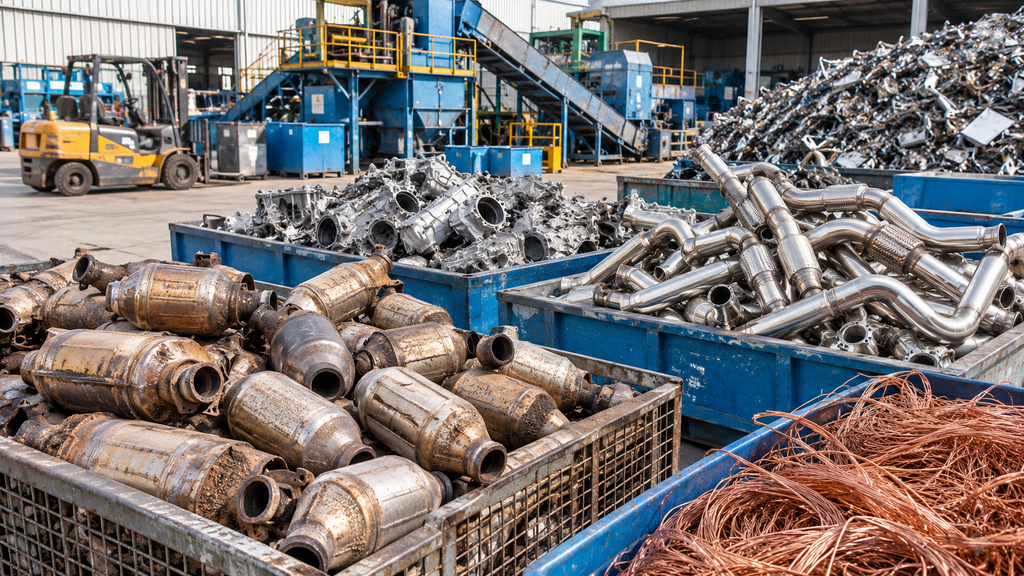
For ordinary scrap metals, buyers often separate materials such as copper, aluminum, brass, and steel before determining payment. Each category has different market conditions and processing requirements.
Catalytic converters are more specialized. Their potential value depends on the recoverable precious metals and the method used to evaluate the unit.
Before choosing a buyer, consider these questions:
- Does the buyer explain how the converter is identified?
- Are the quoted prices based on a recognizable grade or analysis?
- Are deductions and processing charges explained clearly?
- Does the business follow applicable ownership and purchasing requirements?
- Can the buyer confirm whether your specific converter is accepted?
It is worth contacting a recycling center directly rather than relying on outdated online prices. This is especially important when precious metal markets change.
Why Choose Responsible Automotive Recycling in South Florida?
Automotive recycling is about more than getting rid of an unwanted vehicle component. It helps recover materials that can be used again while reducing unnecessary waste.
For residents and businesses in South Florida, choosing a local recycling business can make it easier to manage different types of unwanted metal and automotive materials.
All Metal Recycling offers metal recycling services for customers in Palm Beach, Broward, and Miami-Dade counties. Its listed accepted materials include aluminum, copper, brass, lead, zinc, stainless steel, batteries, electric motors, and other recyclable metal items.
If you have additional automotive scrap, you can explore the company’s metal recycling services to learn more about accepted material categories.
Customers in the surrounding region can also explore the company’s local service information:
- Scrap metal recycling in West Palm Beach, FL
- Scrap metal recycling in Fort Lauderdale, FL
- Scrap metal recycling in Miami, FL
These local pages provide information about All Metal Recycling’s wider metal recycling services. Always confirm acceptance of a specific automotive component before visiting.
Can You Recycle a Catalytic Converter in Florida?
Yes, legally obtained catalytic converters can be recycled through properly authorized channels. However, Florida has specific requirements relating to detached catalytic converters, ownership, and the businesses permitted to purchase them.
Under Florida’s Catalytic Converter Antitheft Act, Section 860.142, a person may not knowingly purchase a detached catalytic converter unless they are a registered secondary metals recycler. The law also addresses stolen converters, altered identification numbers, and detached converters without proof of ownership.
Florida’s Section 538.26 also identifies catalytic converters as restricted regulated metals property and sets requirements for their purchase and handling.
If you have a converter removed from your own vehicle, keep any available ownership documents, repair invoices, vehicle information, or other supporting records. If the component came from a repair shop or business, retain documentation showing its legitimate origin.
Never purchase, sell, or transport a converter that you suspect may be stolen. Always check the applicable legal requirements before arranging a transaction.
How to Prepare an Old Catalytic Converter for Recycling
A little preparation can make the evaluation process easier and help prevent unnecessary delays.
Follow these practical steps:
- Keep the converter intact: Avoid cutting open the housing or removing the internal substrate.
- Preserve identification markings: Do not erase, grind, or alter serial numbers and manufacturer information.
- Collect supporting documents: Keep receipts, repair orders, and ownership information where available.
- Provide vehicle details: The make, model, year, and engine information may help with identification.
- Request an evaluation: Ask the buyer what information is needed before bringing the component in.
- Compare transparent offers: Understand the grading method and any deductions before accepting a price.
Do not attempt to extract precious metals yourself. Cutting, grinding, crushing, or chemically treating converter material can create avoidable safety and environmental hazards.
Recycle Your Automotive Scrap with All Metal Recycling
When you have unwanted automotive materials or other recyclable metal, choosing an established local recycling business can simplify the process.
All Metal Recycling serves customers throughout Palm Beach County and nearby South Florida communities. Whether you are clearing out metal from a property, handling recyclable automotive materials, or looking for a local place to bring accepted scrap, the business provides a convenient option for metal recycling.
If you also have an unwanted vehicle, explore All Metal Recycling’s junk car recycling service to learn about its vehicle purchasing options.
For catalytic converters specifically, call ahead to confirm acceptance, documentation requirements, and current evaluation options. This ensures you know what to expect before making the trip.
Contact All Metal Recycling:
- Phone: 561-420-1111
- Location: 4100 S Military Trl, Lake Worth Beach, FL 33463, United States
- Website: https://allmetalrecycling.com/
Choose responsible recycling and give eligible automotive materials an opportunity to return to the resource cycle.
Frequently Asked Questions
1. Why is catalytic converter recycling valuable?
Used catalytic converters can contain platinum, palladium, and rhodium. Recovering these precious metals allows them to be reused in industrial applications and reduces the need to obtain all materials from new mining.
2. How much can I get for an old catalytic converter?
The amount depends on the converter’s identification, precious metal content, condition, processing method, and current market prices. Contact a qualified buyer for an evaluation rather than relying on a general online estimate.
3. Can I sell a catalytic converter without identification numbers?
Identification numbers are important for determining the converter’s origin and potential value. Florida law prohibits certain transactions involving converters with removed, altered, or defaced identification markings. Contact an authorized recycler for guidance.
4. Does All Metal Recycling accept catalytic converters?
All Metal Recycling lists several recyclable metal categories and automotive materials on its website, but catalytic converters are not specifically listed among its accepted items. Contact All Metal Recycling at 561-420-1111 to confirm whether it currently accepts your particular converter and what documents are required.
5. What other automotive scrap metals can I recycle?
Depending on the material and its condition, recyclable automotive scrap may include aluminum rims, radiators, copper wiring, lead-acid batteries, and other metal components. All Metal Recycling lists several of these categories among its accepted materials. Contact the business to confirm the requirements for your items.
6. Where can I find a metal recycling center in South Florida?
All Metal Recycling serves customers in Palm Beach, Broward, and Miami-Dade counties. You can contact the business at 561-420-1111 to ask about accepted materials, current pricing, and directions to its Lake Worth facility.