
How to Scrap an Air Conditioner
To scrap an air conditioner legally, you must first have the chemical refrigerant (Freon) safely extracted by an EPA-certified technician using specialized recovery equipment. Once the unit is documented as clean, it can be dismantled into its high-value component parts, including copper-aluminum radiators, sealed compressor units, electric fan motors, and clean structural steel.
To maximize profit when learning how to scrap an air conditioner, you must separate the copper-aluminum coils ($Cu$/$Al$) from the steel frame. All Metal Recycling buys certified, evacuated HVAC units from residential homeowners and commercial contractors across Palm Beach County, offering premium daily non-ferrous rates for clean coils and sealed compressor pumps.
The Legal and Environmental Rule: EPA Section 608
Before touching a single bolt on an old central air conditioning condenser or a window unit, you must address the environmental regulations. Under Section 608 of the Clean Air Act, it is a federal crime to knowingly vent or release ozone-depleting substances, such as R-22 or R-410A refrigerants, into the atmosphere.
Violating these regulations carries heavy financial penalties. Professional scrap yards are strictly prohibited from accepting air conditioning units that show signs of uncertified or illegal line cutting. To comply:
- Have a licensed HVAC technician evacuate the gas.
- Obtain a signed recovery log sheet or statement from the technician.
- Present this documentation at our scale house to verify environmental compliance.
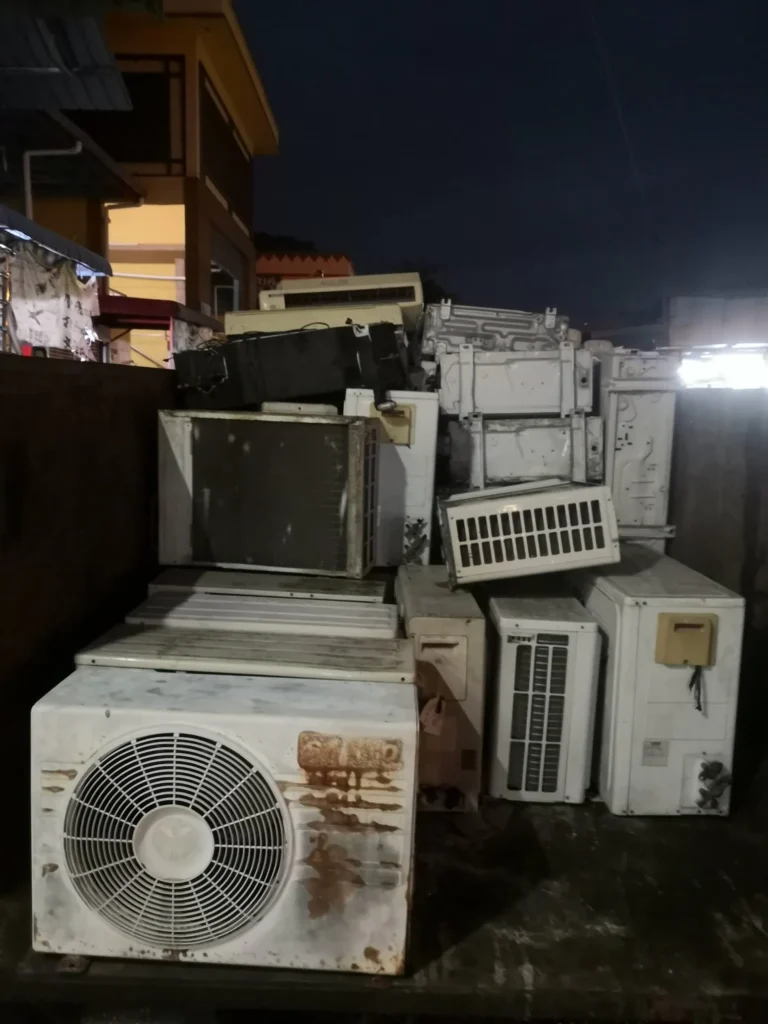
The Anatomy of an AC Unit: Where the Money Is
An air conditioning unit is a goldmine of non-ferrous metals, but leaving the unit completely assembled means you will receive the lowest common denominator price: “Light Iron” or “Shredder” scrap. To unlock the real financial value, you must break the unit down into its core components.
1. Copper-Aluminum Radiator Coils (Cu/Al Coils)
These are the cooling fins where aluminum plates are pressed onto copper tubing. This material commands an excellent price per pound at the scale. If you leave the steel brackets attached to the ends, it is classified as “Dirty $Cu$/$Al$.” Cutting the steel ends off with a reciprocating saw upgrades the material to “Clean $Cu$/$Al$,” substantially increasing the payout.
2. The Sealed Unit (The Compressor)
The heavy black dome at the bottom of the unit is the compressor. It contains high-grade steel housing packed with internal copper windings. Scrap yards buy these as a distinct category known as “Sealed Units.” They are heavy and add significant weight to your scrap load.
3. Electric Motors and Wiring
The condenser fan motor contains tight bundles of insulated copper wire. Snip the wire leads completely off to place into your insulated wire bin, and scrap the fan motor body separately.
$$\text{Total AC Value} = (W_{coils} \times P_{clean\_CuAl}) + (W_{compressor} \times P_{sealed\_unit}) + (W_{steel} \times P_{light\_iron})$$
Step-by-Step Guide to Dismantling an HVAC Condenser
If you have an old failed system sitting behind your house in Lake Worth, Boynton Beach, or Wellington, follow this systematic breakdown procedure using basic shop tools after certified refrigerant evacuation has occurred.
[Evacuated AC Condenser]
       │
       ├── Snip & Strip ──> Insulated Copper Wire
       │
       ├── Unbolt Fan ────> Fan Motor & Aluminum Blades
       │
       ├── Cut Ends Off ──> Clean Copper-Aluminum Coils
       │
       ├── Slice Bolts ───> Sealed Unit Compressor Pump
       │
       └── Sheet Metal ───> Light Iron / Shred Steel Frame
- Safety First: Put on heavy leather work gloves and protective safety glasses. Aluminum cooling fins are razor-sharp.
- Remove the Outer Grill: Use an impact driver to back out the exterior hex screws holding the protective steel cage together.
- Extract the Fan Assembly: Snipping the wires leading to the top fan, unbolt the fan motor from the top shroud. Separate the aluminum fan blades from the steel motor spindle if possible.
- Isolate the Coils: Cut the copper lines connecting the condenser coils to the compressor. Use a reciprocating saw to cut away the iron framing surrounding the radiator matrix.
- Unbolt the Compressor: Slice through the mounting bolts at the base of the sealed unit. Lift the heavy compressor out of the steel pan.
Getting the Best Rate at All Metal Recycling
Once your materials are sorted into distinct bins, bring them to All Metal Recycling on Military Trail. Do not mix your clean copper tubing with your aluminum fins. Keep your load organized so our scale masters can grade each material accurately on our digital scales, ensuring you get top South Florida market rates for your hard labor.