
An old refrigerator can be difficult to deal with. It is large, heavy, contains several different materials, and may contain refrigerant that requires proper handling. Simply putting it out with regular household waste is not always the best option.
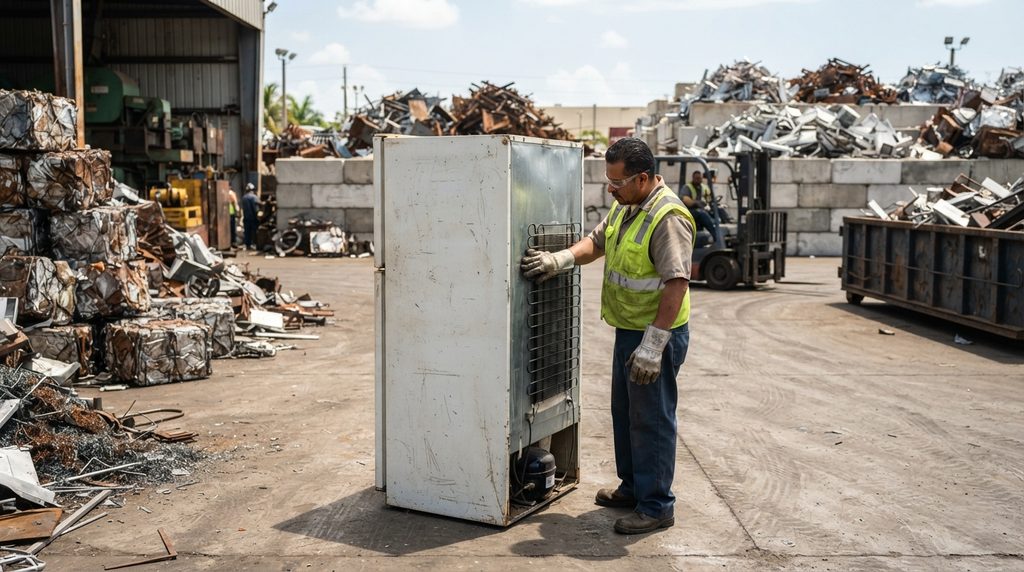
If your refrigerator no longer works, you are replacing an outdated model, or you are clearing out a property, recycling can help recover valuable materials while keeping the appliance out of the landfill.
But how to recycle a refrigerator safely is different from recycling ordinary household scrap. A refrigerator can contain steel, aluminum, copper, wiring, plastics, glass, insulation, a compressor, oil, and refrigerant. Each material may require a different handling or processing method.
This guide explains how refrigerator recycling works, what an old refrigerator may be worth, how to prepare it, and what to know before taking it to a recycling facility in South Florida.
Why Should You Recycle an Old Refrigerator?
Refrigerators contain a significant amount of recyclable material.
The main cabinet is generally made with steel, while other components may contain aluminum, copper, wiring, plastics, glass, and other recoverable materials. According to ENERGY STAR, an average refrigerator that is 10 years old or older contains more than 120 pounds of recyclable steel. ENERGY STAR refrigerator recycling information
Recycling these materials allows them to be recovered and processed instead of treating the entire appliance as ordinary waste.
There is also an environmental reason refrigerator recycling requires extra attention. Refrigerators can contain refrigerants that should not simply be released into the atmosphere. The EPA provides specific guidance for the proper disposal of refrigerated appliances and recovery of refrigerants. EPA appliance disposal guidance
For homeowners, the safest approach is therefore to use an appropriate appliance or scrap recycling facility instead of dismantling the refrigeration system yourself.
How to Recycle a Refrigerator Safely
If you are researching how to recycle a refrigerator, the first thing to understand is that you generally do not need to take the entire appliance apart yourself.
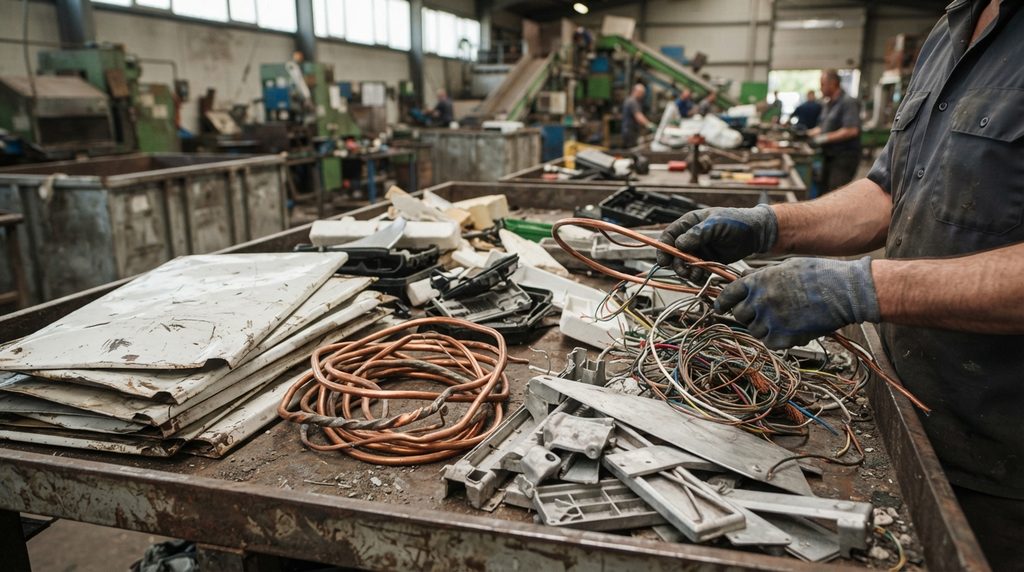
Instead, follow these practical steps.
1. Empty the Refrigerator
Remove all food, drinks, containers, shelves, drawers, and personal belongings.
Check the freezer section and storage compartments carefully. Once the refrigerator is being prepared for recycling, there should be nothing valuable or personal left inside.
If the appliance has recently been unplugged, allow moisture to dry before transportation.
2. Unplug the Appliance
Disconnect the refrigerator from its electrical supply before moving it.
If it has a water dispenser or ice maker connected to a water line, follow the manufacturer’s instructions or have the connection safely disconnected.
Because refrigerators are heavy and difficult to maneuver, use suitable equipment or additional help when moving one.
3. Do Not Cut Refrigerant Lines
This is one of the most important safety points.
Do not cut, drill, puncture, crush, or intentionally open refrigerant lines to make the refrigerator easier to transport or scrap.
The EPA explains that refrigerant-containing appliances need to be handled according to appropriate disposal requirements. EPA safe disposal requirements for refrigeration appliances
Attempting to remove refrigerant without the appropriate equipment and procedures can create environmental and safety problems.
4. Confirm Recycling Requirements
Before loading the refrigerator into a vehicle, contact your recycling facility.
Ask:
- Do you accept refrigerators?
- Does the appliance need refrigerant recovery?
- Do you accept non-working refrigerators?
- Is pickup available?
- Are there specific preparation requirements?
- How is the appliance evaluated?
- What are the current payment or pricing procedures?
These questions can save time and prevent you from arriving with an appliance the facility cannot accept.
If you have other metal materials to recycle at the same time, you can also review the metal recycling guide to understand how recyclable metals are generally handled.
What Happens to a Refrigerator at a Recycling Center?
Once an old refrigerator reaches an appropriate recycling facility, it can go through several processing stages.
The appliance may first be inspected to determine its condition and material composition.
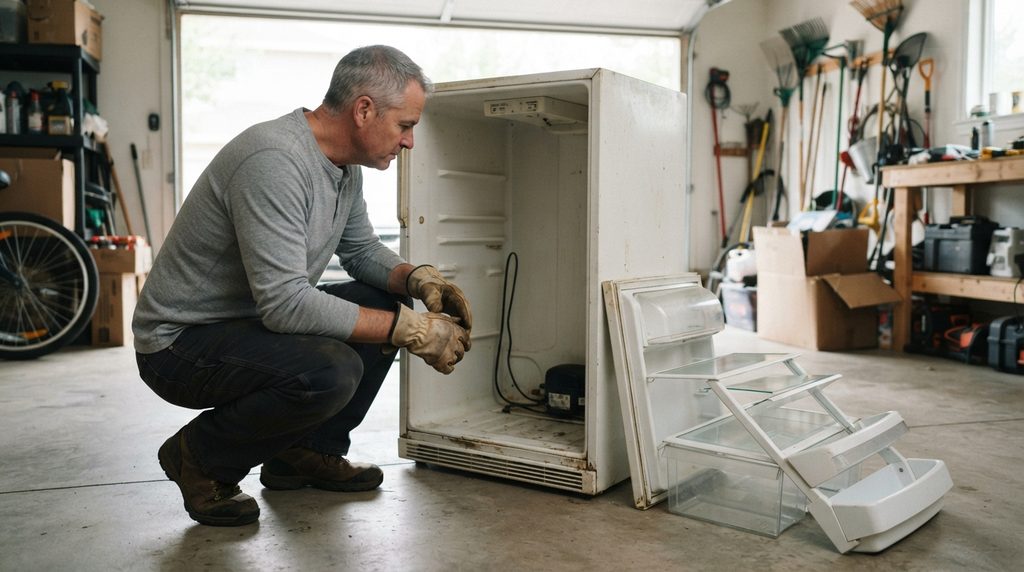
Refrigerant-containing systems need appropriate handling before the appliance is processed as scrap. After the required preparation, recyclable components can be separated.
Depending on the appliance, recoverable materials may include:
- Steel
- Copper
- Aluminum
- Electrical wiring
- Certain plastics
- Glass
- Compressor components
- Other recyclable metals
The value of the refrigerator is therefore not based on one material alone.
A recycling facility may evaluate the appliance according to its overall material composition and current market conditions.
This is one reason it is better to ask a recycling facility about its current requirements rather than assuming that every refrigerator has the same scrap value.
How Much Is a Refrigerator Worth as Scrap?
One of the biggest questions people have when researching refrigerator recycling is whether an old appliance is worth anything.
The answer depends on several factors.
The amount you may receive can be affected by:
- The refrigerator’s weight
- The type and quantity of recoverable metals
- Current scrap market conditions
- Material classification
- Appliance condition
- Processing requirements
- Local demand
- Whether additional recyclable materials are included
People searching how much does metal recycling pay should understand that scrap prices are not fixed.
A price advertised for copper, aluminum, or another material does not automatically represent the value of a complete refrigerator.
Refrigerators contain a mixture of materials, and a substantial portion of the appliance may consist of steel, plastics, insulation, and other components.
What Are Recycling Center Prices for Refrigerators?
Recycling center prices can change over time, so it is better to request current information directly from the facility.
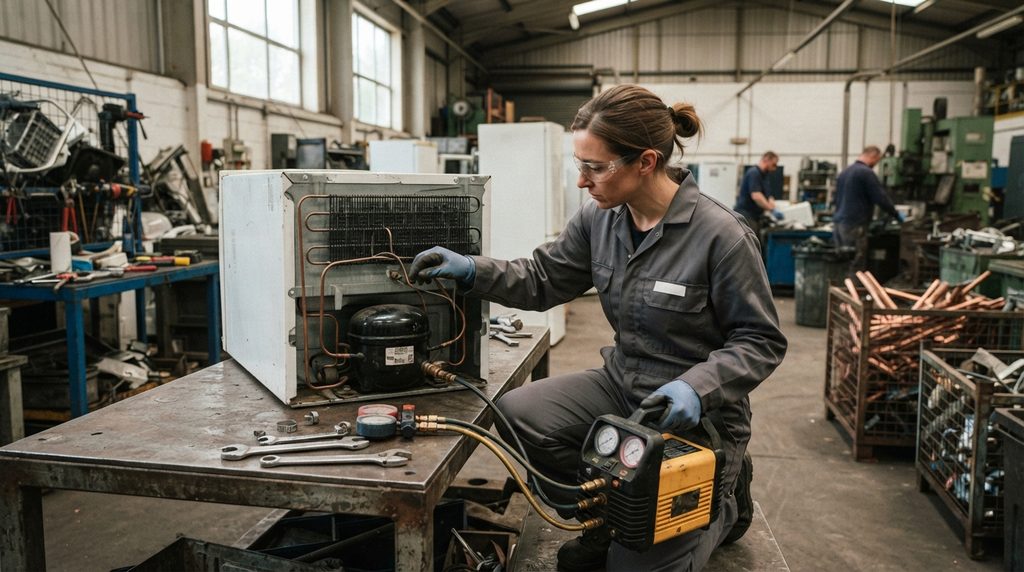
When asking about the value of your refrigerator, provide useful details such as:
- Approximate size
- Brand and model, if available
- Whether it is complete
- Whether it is working or non-working
- Number of refrigerators
- Whether you have additional scrap metal
This gives the recycling facility more useful information when explaining the evaluation process.
You should also avoid comparing the price of a complete refrigerator with the price of clean copper or aluminum. Those materials are usually handled and valued differently.
Can You Scrap a Refrigerator for Cash?
In many cases, an unwanted refrigerator can have scrap value.
If your goal is to scrap a refrigerator for cash, contact a recycling facility that accepts refrigerators and ask about its current process.
Do not assume that removing components yourself will automatically increase the value.
In fact, dismantling refrigeration equipment without understanding what is inside can create unnecessary risks.
Instead, ask the recycler whether it wants the refrigerator intact and what preparation is required.
If you are cleaning out a garage, workshop, rental property, or commercial location, you may have other recyclable metals that can be processed at the same time.
Keeping materials organized can make the recycling process easier.
For example, if you also have old computers, electronics, or other electronic equipment, you can review the electronic recycling service separately instead of mixing electronic materials with your refrigerator.
Should You Remove the Compressor From a Refrigerator?
It may seem logical to remove the compressor because it contains metal components, but homeowners should not automatically dismantle a refrigerator to recover individual parts.
A refrigerator’s cooling system can contain refrigerant and oil, while electrical components and sharp metal edges can create additional hazards.
For this reason, ask the recycling facility whether it wants the refrigerator delivered intact.
The objective of responsible recycling is not simply to remove as many parts as possible. It is to get recyclable materials into the correct processing stream safely.
If the appliance requires refrigerant recovery, that step should be handled through an appropriate process before the appliance is finally processed.
How to Prepare a Refrigerator for Transportation
Once you have confirmed that a recycling facility accepts your refrigerator, prepare it carefully.
Empty the Appliance
Remove everything from the refrigerator and freezer.
Secure Loose Components
Shelves, drawers, and other removable pieces should be secured so they do not move around during transportation.
Protect the Doors
Make sure the doors cannot swing open unexpectedly while the appliance is being moved.
Use Appropriate Equipment
A refrigerator can be extremely heavy. A dolly, appliance moving straps, or additional people may be necessary.
Secure the Refrigerator During Transportation
If the refrigerator is transported in a truck or trailer, secure it properly so it cannot shift.
Confirm the Facility’s Requirements
Always confirm the recycling facility’s requirements before making the trip.
If the refrigerator is too large or difficult to transport, ask whether a pickup option is available.
Refrigerator Recycling vs. Regular Disposal
There is an important difference between sending an old refrigerator to ordinary waste disposal and using an appropriate recycling process.
A refrigerator is not simply a steel box.
It may contain refrigerant, compressor oil, electrical components, insulation, plastics, and multiple recyclable metals.
The EPA explains that household refrigerators and freezers can contain refrigerants and other components that require proper handling during disposal. EPA appliance disposal requirements
A responsible recycling process can therefore help recover useful materials while ensuring that regulated components are handled appropriately.
This is especially important when dealing with older refrigerators because the refrigerant technology used in older models can differ from newer appliances.
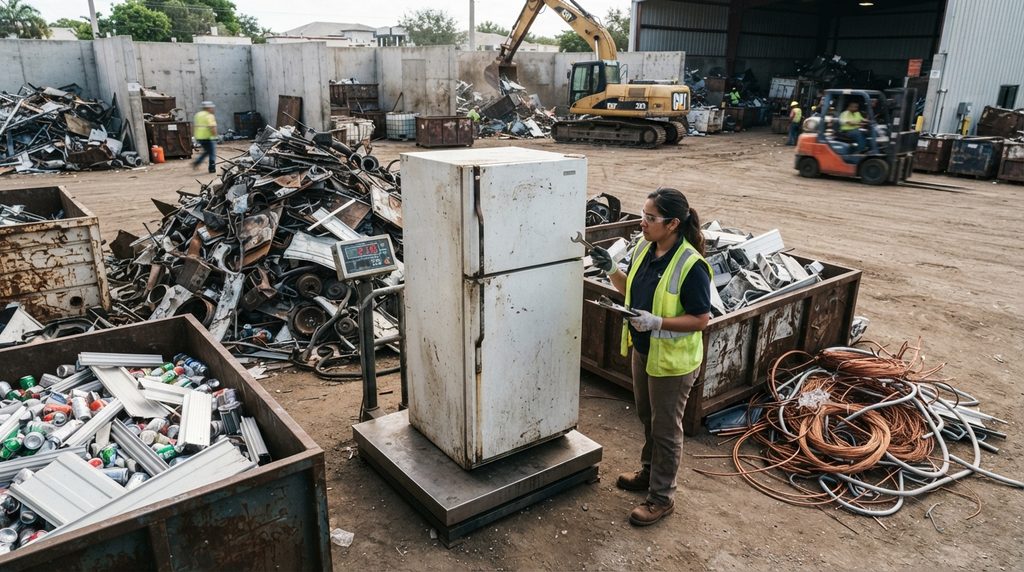
What About Refrigerator Refrigerant?
Refrigerant is one of the main reasons refrigerator recycling requires more care than ordinary scrap metal recycling.
Different generations of refrigerators have used different refrigerants. Some older appliances may contain substances that have environmental impacts if improperly released.
The EPA’s refrigeration disposal guidance explains requirements designed to prevent refrigerant emissions during appliance disposal. EPA refrigeration safe-disposal requirements
For homeowners, the practical rule is simple:
Do not intentionally release refrigerator refrigerant.
Do not cut refrigeration lines just because you want to sell the appliance as scrap.
Instead, contact an appropriate recycling facility and ask what needs to happen before the refrigerator enters the recycling stream.
What If You Are Also Recycling an Air Conditioner?
Home renovations and property cleanouts often involve more than one appliance.
If you are replacing a refrigerator and an old air conditioner at the same time, keep the equipment separate and ask about the appropriate recycling process for each.
You can learn more about the air conditioning recycling service available for qualifying equipment.
Separating different types of equipment helps the recycling facility determine how each item should be handled.
Where Can You Recycle an Old Refrigerator in South Florida?
For homeowners and businesses in South Florida, choosing a local recycling company can make the process more convenient.
All Metal Recycling provides recycling services for qualifying recyclable metal materials and serves customers throughout the region.
If you are located near West Palm Beach, you can explore scrap metal recycling in West Palm Beach when looking for a local recycling option.
You can also explore scrap metal recycling in Palm Springs if that location is more convenient for your project.
Before transporting a refrigerator, contact the recycling facility to confirm that your particular appliance is currently accepted and ask about preparation requirements.
How to Get the Most From Your Refrigerator Recycling
If you want to recycle your refrigerator responsibly while understanding its potential scrap value, a little preparation can make the process easier.
Ask About Current Prices
Scrap values can change with market conditions. Instead of relying on an old online price, ask the recycling facility for current information.
Keep the Appliance Intact
Do not dismantle refrigerant-containing components unless the recycling facility specifically instructs you to do so.
Separate Other Scrap
If you have copper, aluminum, brass, steel, or other recyclable material, keep it organized.
Different materials may have different classifications and values.
Confirm Acceptance
Not every recycling center handles every type of appliance. Confirm refrigerator acceptance before transporting it.
Ask About Pickup
If you have multiple large appliances or a refrigerator that is difficult to move, ask whether pickup options are available.
Recycle Other Eligible Materials
A property cleanup may involve several types of recyclable material.
For example, if you are also getting rid of an unwanted vehicle, you can review the junk car recycling service to learn more about recycling options for qualifying vehicles.
What Can Make Refrigerator Recycling Easier?
The easiest recycling experience usually starts with a simple phone call.
Before moving a heavy appliance, ask the recycler what it accepts, whether the refrigerator needs any preparation, whether refrigerant recovery is required, and whether pickup is available.
If you have several items, make a list before contacting the facility.
For example:
- One old refrigerator
- Scrap steel
- Copper wire
- Aluminum
- An old air conditioner
- Other household metal
Providing this information can help the recycling team explain the appropriate process.
It can also prevent you from spending time dismantling materials that the facility would prefer to receive intact.
Why Choose All Metal Recycling?
When dealing with a large appliance such as a refrigerator, having a local recycling company available can simplify the process.
All Metal Recycling helps homeowners, contractors, businesses, and property owners recycle qualifying metal materials.
Instead of guessing about recycling center prices, attempting to dismantle the appliance yourself, or leaving an unwanted refrigerator with ordinary waste, you can contact All Metal Recycling to ask about current acceptance requirements and recycling options.
This can be particularly useful during garage cleanouts, property renovations, appliance replacements, construction projects, and commercial cleanups.
The most important point is to handle refrigerators responsibly because they contain more than recyclable metal.
Final Thoughts
Understanding how to recycle a refrigerator starts with recognizing that an old refrigerator is a combination of recyclable materials and components that may require special handling.
Empty the appliance, disconnect it safely, avoid cutting refrigerant lines, confirm the facility’s requirements, and ask about current pricing before transporting it.
If you are searching for refrigerator recycling near me, scrap refrigerator near me, or trying to sell an old refrigerator, start by contacting a local recycling facility.
Do not assume that every refrigerator has the same scrap value. The amount depends on its weight, materials, market conditions, and how the facility classifies and processes the appliance.
For homeowners and businesses in South Florida, All Metal Recycling can help you understand the appropriate recycling route for qualifying metal and appliances.
Frequently Asked Questions
Can I recycle an old refrigerator with All Metal Recycling?
All Metal Recycling handles qualifying recyclable metal and appliance materials. Because refrigerators can contain refrigerants, contact the team before bringing your appliance to confirm current acceptance and preparation requirements.
How much does a scrap refrigerator pay?
The value can vary depending on the refrigerator’s weight, material composition, current market conditions, and processing requirements. Contact All Metal Recycling for current information about your specific appliance.
Can I remove the refrigerant before recycling my refrigerator?
You should not cut refrigerant lines or intentionally release refrigerant yourself. Refrigerated appliances have specific disposal requirements, and proper recovery should be handled through an appropriate process.
Does All Metal Recycling accept other types of scrap?
All Metal Recycling works with qualifying recyclable metal materials. If you have multiple items from a property cleanup, contact the team to confirm which materials are currently accepted.
Can I recycle a refrigerator for cash in South Florida?
An old refrigerator may have scrap value depending on its materials and current market conditions. All Metal Recycling can provide information about the evaluation and recycling process for qualifying appliances.
Where can I recycle a refrigerator near West Palm Beach?
All Metal Recycling serves customers in South Florida. Contact the team before transporting your refrigerator to confirm current acceptance, preparation requirements, and available recycling options.